.webp?width=1410&height=1531&name=integratori_campionario_0081%20(1).webp)

.webp?width=600&height=708&name=bobina-energy-bar-packstyle%20(1).webp)

.webp?width=2000&name=Packstyle_DR2A2561_058(1).webp)


.webp?width=764&height=1069&name=megamenu-food%20(1).webp)
.webp?width=764&height=1069&name=megamenu-coffee%20(1).webp)
.webp?width=764&height=1069&name=megamenu-hemp%20(1).webp)
.webp?width=764&height=1069&name=megamenu-cosmetics%20(1).webp)
.webp?width=764&height=1069&name=megamenu-supplements%20(1).webp)
.webp?width=764&height=1069&name=megamenu-liquids%20(1).webp)
.webp?width=764&height=1069&name=megamenu-herbs%20(1).webp)
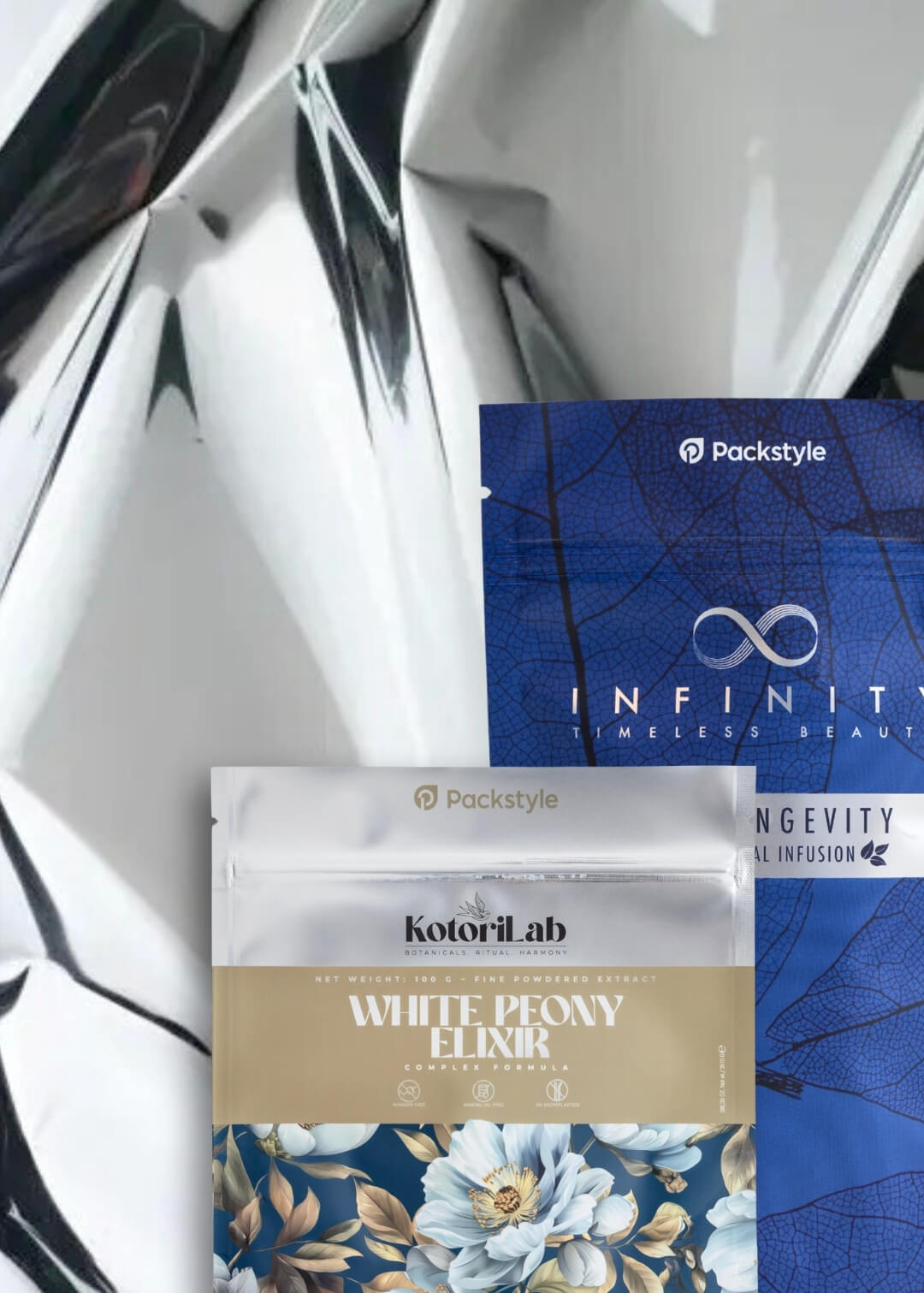
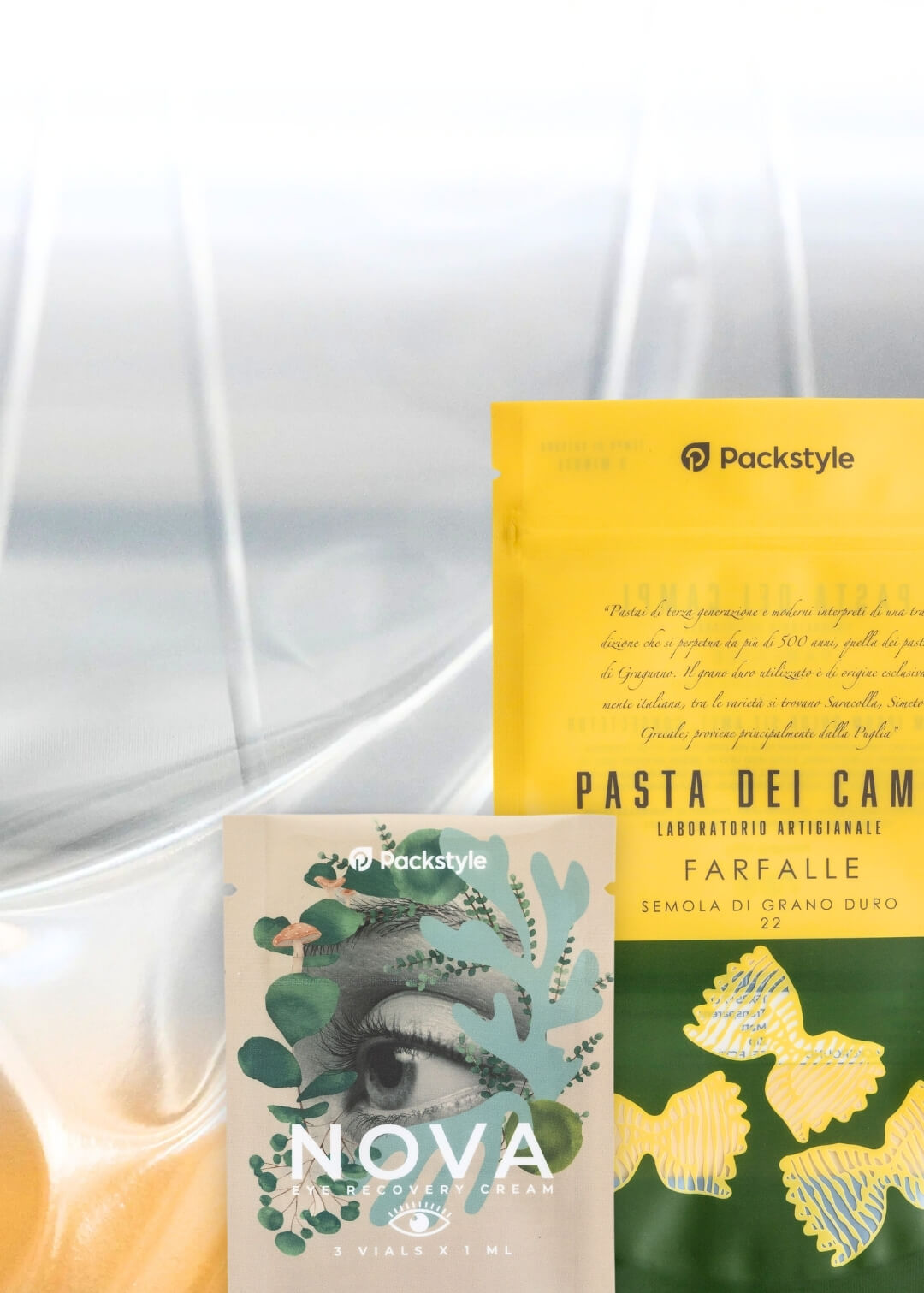
In the dietary supplement sector, blister packs have long been one of the most widely used packaging solutions for capsules: they are cost-effective, provide a high level of product protection and are immediately recognizable to consumers. With the application of the PPWR – Regulation (EU) 2025/40, however, multimaterial blister packaging is set to become one of the main challenges for companies in the sector.
The impact on multimaterial blister packs stems from the combined application of three provisions set out in the Regulation. It is precisely the combination of these requirements that makes this format increasingly difficult to reconcile with the new regulatory framework. Let’s look at them in detail.
1. The Clock Is Ticking: Supplements Are Food
An aspect that is often underestimated is that, from a regulatory standpoint, dietary supplements are considered food in all respects. As a result, packaging intended to contain them falls fully within the scope of the PPWR and must comply with all applicable requirements, including those relating to substances used in food-contact materials.
Among the most significant changes introduced by the Regulation are the restrictions on the use of PFAS (per- and polyfluoroalkyl substances), known as forever chemicals because of their high persistence in the environment. The PPWR introduces specific limits for these substances in food-contact packaging, applicable from August 12, 2026.
This issue is also highly relevant to traditional blister packs. Some barrier materials, functional coatings, surface treatments or adhesives historically used to enhance their performance may contain compounds belonging to the PFAS family. For this reason, companies must carefully verify the composition of the materials they use and consult with their suppliers to ensure compliance with the new requirements, including, where necessary, through dedicated chemical analyses.
Since August 12, verifying the materials used has become essential, in light of the new requirements coming into application and the need to replace any materials that are no longer compliant. Developing a new barrier structure, carrying out its technical validation and obtaining any necessary certifications can take considerable time, making it essential to plan the transition well in advance.
2. Heavy Metals: A Limit to Be Verified and Documented in Packaging Components
Another requirement concerns the presence of certain heavy metals in packaging and its components. Article 5 of the PPWR establishes that the combined concentration of lead (Pb), cadmium (Cd), mercury (Hg) and hexavalent chromium (Cr VI) must not exceed 100 mg/kg, as already provided for under the previous legislation (Directive 94/62/EC). This limit refers to the combined concentration of the four metals, not to each individual element.
The requirement does not apply exclusively to the main packaging material, but to the packaging and its components as a whole. For this reason, in the case of complex structures such as blister packs, verification must take into account the entire composition of the system: plastic materials, aluminium, lacquers, coatings, adhesives and any other components that may be present.
For companies using blister packs for dietary supplements, it therefore becomes important to have documented information on the composition of the materials and on the compliance of the different components with the limit set by the Regulation. The new element introduced by the PPWR is that compliance with the requirements relating to heavy metals must be demonstrated through the technical documentation required under Annex VII.
Here too, proactively verifying the composition of the materials makes it possible to identify any potential issues in good time and, where necessary, modify the packaging structure before non-compliance can become a problem when placing the packaging on the market.
3. Traditional Blister Packaging Faces New Recyclability Requirements
The third critical issue concerns the structure of traditional blister packaging itself. A conventional pharmaceutical blister is, in most cases, a composite packaging solution consisting of a transparent thermoformed PVC component (or more complex structures such as PVC/PVDC) and an aluminium foil laminated with a heat-sealable lacquer.
These materials have very different characteristics and properties and are permanently bonded together to ensure product protection and preservation. However, this composite structure makes it difficult to separate the different components: this is not an operation that consumers can carry out manually and it is also challenging within industrial sorting and mechanical recycling processes.
The PPWR does not introduce a general ban on composite packaging, but establishes, for the first time, binding quantitative and qualitative criteria for assessing recyclability. Packaging is classified according to different performance classes, from Class A to the category “technically non-recyclable”, based on its actual ability to be recycled on an industrial scale.
The critical issue for blister packaging lies precisely in meeting these performance levels:
- from 2030, packaging will have to achieve at least Class C (70% recyclability) to be considered recyclable under the Regulation’s criteria;
- from 2038, the minimum requirement will rise to Class B (80%), introducing an additional level of selectivity.
For PVC/aluminium blister packaging, the challenge is clear: the effective separation of the two materials within real-world, large-scale recycling systems is currently a critical issue. Without redesigning the packaging, some traditional configurations may fail to achieve the recyclability performance required under the new regulatory framework.
In practical terms, it will therefore no longer be sufficient to continue using an established format based on its historical performance: its recyclability will need to be demonstrated according to the methodologies provided for by the PPWR, or alternative solutions designed according to Design for Recycling principles will need to be assessed in good time.
4. Less Weight, Lower Costs: When Sustainability Impacts Competitiveness
The fourth element directly concerns the economic impact of packaging design choices. Article 10 of the PPWR introduces the principle of packaging minimisation: each solution must be designed using only the amount of material necessary to perform the required functions, avoiding over-packaging, unused volume and additional components that are not technically justified.
This requirement is complemented by a mechanism already familiar to Italian companies operating within the Extended Producer Responsibility (EPR) system, but which the PPWR strengthens at European level: the modulation of environmental contributions according to the environmental performance of packaging.
In practice:
- heavier, multi-material and difficult-to-recycle packaging may be subject to higher EPR costs;
- lighter packaging designed according to recyclability criteria and based on monomaterial structures may benefit from more favourable economic conditions.
For a supplement manufacturer handling significant volumes, these factors are not simply an administrative detail, but a variable that can affect the overall cost of packaging and, consequently, product margins.
The transition towards lighter and more easily recyclable solutions is therefore not only a matter of regulatory compliance. It can also represent an opportunity to optimise costs across the supply chain and prepare for a model in which the environmental performance of packaging will play an increasingly important role in industrial decision-making.
The Solution: Packstyle Monomaterial Stand-Up Pouches
In the face of these converging challenges — restrictions on the substances used, increasingly stringent recyclability requirements and the growing impact of EPR costs — the most effective response is not to look for a simple adaptation of traditional blister packaging, but to rethink the format according to a more future-oriented design approach.
Packstyle monomaterial stand-up pouches have been developed precisely to meet this need:
- Safe and compliant: designed with the PPWR’s essential requirements in mind from the development stage, rather than adapted retrospectively.
- PFAS compliant within the applicable limits: barrier materials selected and validated without the chemical substances subject to the new European restrictions.
- Monomaterial: no non-separable plastic/aluminium laminate, but a single material family designed from the outset for large-scale recycling, well beyond the Class C threshold required from 2030.
- Lightweight by design: weight and volume optimised in line with Article 10, with a direct and measurable impact on future EPR fees.
- Digitally customisable: digital printing enables flexible production runs, rapid updates to graphics and compliant labelling, and faster time-to-market compared with the traditional blister manufacturing model.
- Ready for the circular economy: a format designed to remain compliant not only from August 12, 2026, but also with the more stringent targets set for 2030 and 2038.
The message, in short, is clear: the PPWR should not be seen solely as a new regulatory constraint, but as an opportunity to rethink established packaging solutions in light of new environmental, technical and economic requirements.
For the dietary supplement sector, this means considering the future of traditional blister packaging today: a format that has provided protection and efficiency for decades, but which, as the regulatory framework evolves, presents increasingly significant challenges in terms of materials, recyclability and management costs.
Packstyle is ready to support companies through this transition, offering monomaterial packaging solutions designed to meet the new PPWR requirements and supporting the shift towards simpler, recyclable and more sustainable formats.
Would you like to assess whether and how your current blister packaging could evolve towards a PPWR-compliant monomaterial solution? Contact us: planning the change today means having the time needed to choose the solution that best meets your needs.